
Assessment: Relational Health
This brief self-assessment is designed to help you take stock of the current state of your social connections. It is not designed to judge or label, but to notice. Relational health is not fixed; it evolves across seasons of life, is shaped by our circumstances, capacity, stress, and support. At different times, we may feel deeply connected, and at others, more distant or strained.
There are no right or wrong answers here. This is not a diagnostic tool, nor a measure of your worth or success in relationships. Instead, it is an invitation to cultivate some awareness and a starting point for understanding where your relationships feel healthy, where they feel challenging, and where attention may be needed. Approach this reflection with curiosity and a willingness to learn.
- View Self-Assessment
-
Self-Assessment
Instructions: Read each statement and rate how true it feels for you right now.
- 1 = Strongly disagree
- 2 = Disagree
- 3 = Neutral / Sometimes true
- 4 = Agree
- 5 = Strongly agree
Safety & Trust
- I feel emotionally safe being myself in my most important relationships.
- I can express concerns or disagreements without fear of rejection or harm.
Being Seen & Understood
- I feel heard and understood by people who matter to me.
- There is at least one person in my life who truly understands me.
Significance & Value
- I feel that my presence and contributions matter in my relationships.
- I feel appreciated for who I am, not just for what I do.
Support & Reliability
- I have people I can turn to for emotional support during difficult times.
- I can rely on others when I need help or encouragement.
Belonging & Connection
- I feel a sense of belonging in at least one group or community.
- I generally feel connected rather than isolated in my day-to-day life.
Scoring & Reflection
- 40–50: Strong relational health foundations
- 30–39: Moderate relational health; opportunities for growth
- Below 30: Relational health may be strained or under-supported
What This Means
If You Scored 40–50: Strong Relational Health Foundations
You are likely experiencing relationships that feel safe, reciprocal, and nourishing. You have access to support, feel seen and valued, and experience a sense of belonging. This doesn't mean that your relationships are perfect, but it does mean you have cultivated the capacity to connect in healthy, resilient ways.
What this often looks like:
- You communicate needs and boundaries with relative ease.
- You feel emotionally safe being your authentic self.
- You both give and receive support.
- You experience mutual respect and trust.
- You feel connected to people or communities that matter.
Your Growth Opportunity: Strengthen and Sustain
- Name what's working. Express appreciation out loud. Gratitude reinforces connection.
- Practice relational maintenance. Don't wait for rupture or breakdown. Tend to your relationships proactively.
- Expand your circle intentionally. Seek relationships that stretch, inspire, or challenge you in healthy ways.
- Model vulnerability. Your openness gives others permission to do the same. Shared vulnerability is the key to deeper connections.
- Mentor or support others. Strong relational health becomes even more meaningful when shared.
If You Scored 30–39: Moderate Relational Health, Room for Growth
You likely have some meaningful connections, but also experience inconsistency, strain, or unmet needs. Certain relationships may feel supportive while others feel draining, distant, or effortful. This is a very common and workable place to be, and a powerful invitation for growth.
What this often looks like:
- You feel connected in some spaces but not others.
- You may hold back parts of yourself to maintain harmony.
- You give more than you receive in certain relationships.
- You may struggle to ask for support or express needs clearly.
Your Growth Opportunity: Strengthen and Grow
- Clarify your relational needs. Ask: What do I need more of? Less of?
- Practice honest expression. Share small truths before they become heavy burdens. This takes courage.
- Strengthen one relationship at a time. Depth matters more than breadth. Focus on quality, not quantity.
- Notice patterns. Where do you overextend, over-accommodate, or withdraw?
- Invite mutuality. Healthy relationships allow for give-and-take.
If You Scored Below 30: Relational Health May Be Strained, Unfulfilling, or Under-Supported
This score suggests that connections for you may feel limited, unsafe, inconsistent, or unfulfilling right now. You may feel isolated, misunderstood, or overly responsible for maintaining relationships. This is not a personal failing. This is often a sign of unmet needs, prolonged stress, or relational environments that no longer fit.
What this often looks like:
- Feeling unseen, unheard, or undervalued.
- Difficulty trusting others or relying on support.
- Emotional exhaustion or withdrawal.
- A sense of disconnection, even when around others.
Your Growth Opportunity: Safety First, Then Connection
- Begin with self-compassion. Nothing is wrong with you. Some of your needs may simply be unmet.
- Identify one safe person or space. Connection starts small. Building relationships take time.
- Name your boundaries. Protection is part of honoring yourself. As you advance in your knowledge of relationships, setting boundaries will become easy.
- Seek support intentionally. This may include a trusted friend, mentor, coach, or therapist.
- Rebuild slowly. Safety precedes vulnerability. Connection always grows in stages.
Learning from What You Noticed
Taking time to reflect on your relational health is an act of courage and care. Whatever your score, the most important information lies not in the number, but in what you noticed as you moved through the statements. Which questions resonated most strongly? Which ones gave you pause? Where did you feel affirmed, and where did you feel a sense of longing?
Our relational health is dynamic. It shifts with life transitions, stress levels, health challenges, losses, and growth. A lower score is not a verdict, it is information. A higher score is not a finish-line, it is something to tend to and sustain. Let what you've learned here guide your next steps with awareness rather than urgency. Strengthening relational health is not about fixing yourself, it is about honoring your needs and responding to them with intention.
When reflecting about your relational wellbeing, do so from a place of self-compassion. Learning about how we can improve our relationships takes awareness, insight, time, and practice. The practice of self-compassion can be a powerful tool for supporting yourself as you consider the role that your relationships play in your overall wellbeing.
Assessment: Are You Lonely?
To be clear, loneliness is not a diagnosis, a weakness, or a failure. It is an important signal that points to unmet needs for connection, safety, understanding, or belonging. This brief assessment is designed to help you notice whether loneliness may be present in your life right now. Remember: loneliness can show up even when we are surrounded by people, in relationships, or highly engaged in work and caregiving.
There are no right or wrong answers, and this assessment is not intended to diagnose. Respond to the statements below based on your current life with the awareness that loneliness is dynamic. It can change with life transitions, stress, health challenges, losses, stage of life, and growth.
- View Self-Assessment
-
Self-Assessment
Instructions: Read each statement and rate how true it feels for you right now.
- 1 = Strongly disagree
- 2 = Disagree
- 3 = Neutral / Sometimes true
- 4 = Agree
- 5 = Strongly agree
- I often feel emotionally disconnected from others, even when I'm around people.
- I feel that few people truly understand me.
- I hesitate to reach out for support, even when I need it.
- I feel unseen, unheard, or unimportant in my relationships.
- I spend a lot of time feeling "on my own" with my worries or challenges.
- I feel a sense of emptiness or longing for deeper connection.
- I don't feel like I fully belong anywhere right now.
- I have relationships, but they don't feel as meaningful or nourishing as I'd like.
- I often keep parts of myself hidden to maintain relationships or avoid conflict.
- I feel more isolated than I want to be.
Scoring & Reflection
Add your total score (range: 10–50).
- 10–20: Low current indicators of loneliness
- 21–34: Mild to moderate loneliness may be present
- 35–50: Loneliness may be a significant experience right now
What This Means
If You Scored 10–20
You are likely experiencing a reasonable sense of connection and belonging at this time. This does not mean life is without challenge, but it suggests that your current relationships or communities offer enough emotional nourishment to buffer stress.
Helpful focus: Continue doing what's working. Express appreciation to those who matter to you and stay intentional about connection, and notice early signs of disconnection so they don't grow.
If You Scored 21–34
You may be experiencing situational or emerging loneliness. Some relationships may feel supportive, while others feel distant, effortful, or insufficient. This is a very common experience, especially during transitions, high stress, caregiving, or periods of over-functioning.
Helpful focus: Clarify your needs and aim to increase intentional connection.
5 Gentle Ways Forward:
- Name what's missing, not what's "wrong."
- Identify one relationship where greater depth feels possible.
- Practice small reach-outs rather than waiting for connection to happen.
- Notice where you silence or shrink yourself to keep peace.
- Reconnect with activities or communities that once brought meaning.
If You Scored 35–50
Loneliness may be a significant and ongoing experience right now. You may feel disconnected, unseen, or emotionally alone, even if you are rarely physically alone. This is not a personal failure. It often reflects prolonged stress, unmet relational needs, loss, or environments that no longer support who you are becoming.
Helpful focus: Seek interpersonal safety first, then connection.
5 Supportive Starting Points:
- Begin with self-compassion. Loneliness is a sign that your need for connection is not being met. It is not a flaw.
- Identify one safe person or space where you can be fully authentic — fully you.
- Reduce self-blame. Many contributors to loneliness are structural or situational.
- Seek support intentionally (friend, group, coach, therapist, mentor).
- Go slow. Trust and connection build and rebuild in stages.
Loneliness is a reminder that you are human and wired for connection. Noticing loneliness is not something to fear; it is the first step toward change. Loneliness is responsive to intentional action. Even small, consistent shifts toward connection can meaningfully improve your emotional well-being, physical health, and cognitive resilience over time.
Consider this array of carefully curated resources that will deepen your understanding of loneliness and offer strategies for creating fulfilling social connections.
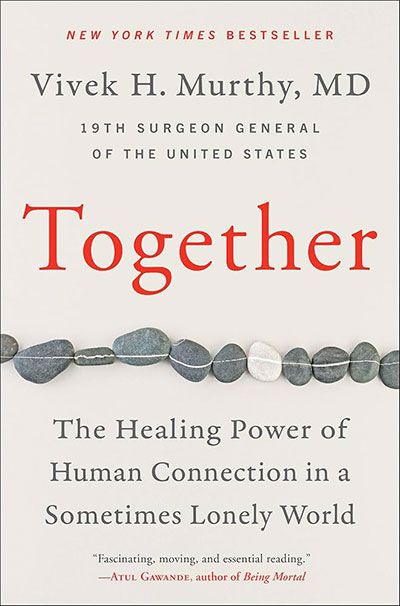
- Dr. Vivek Murthy's book is a great place to start: Together: The Healing Power of Human Connection in a Sometimes Lonely World.
- For evidence-based reading on the epidemic of loneliness and social isolation, read: Our Epidemic of Loneliness and Isolation: The Surgeon General's Advisory on the Healing Effects of Social Connection and Community.
- Consider Dr. Murthy's Parting Prescription for America, a compelling treatise on the power of community and the role that it plays in wellbeing.
- For a lighthearted, practical guide to creating social connections, consider Dr. Murthy's Recipes for Connection.
- Watch Dr. Murthy discuss his "prescription for happiness" in his TEDMED talk.
- Check out the Hidden Brain podcast episode featuring Dr. Vivek Murthy discussing Relationship 2.0 as his antidote to loneliness.
- Loneliness: Human Nature and the Need for Social Connection: A well-written, foundational, research-driven exploration of loneliness as a biological signal, not a personal failing.
- The Art of Gathering: For thoughtful examinations of how intentional gatherings — large and small — can deepen connection and meaning, discover the work of Priya Parker.