
This page will teach you about high blood pressure and how it can be prevented and treated with a healthy lifestyle.
What Is Hypertension:
Hypertension and high blood pressure refer to an increased pressure in the arteries as blood flows through your body. In other words, the blood in your body is flowing through your arteries with a greater force than normal. This increased force can cause injury to the blood vessel walls, putting patients with untreated hypertension at a higher risk of developing conditions like cardiovascular disease, heart failure, or strokes (Fuchs, Heart.org).
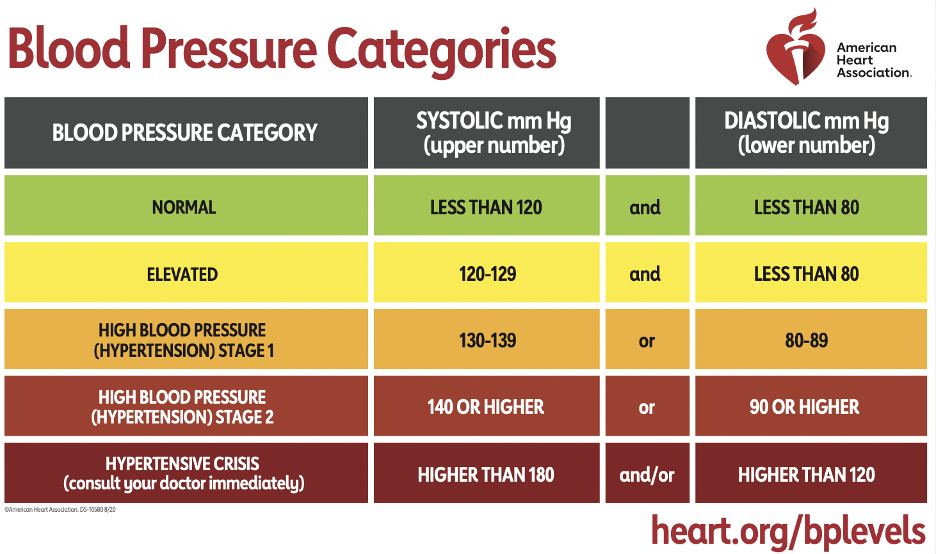
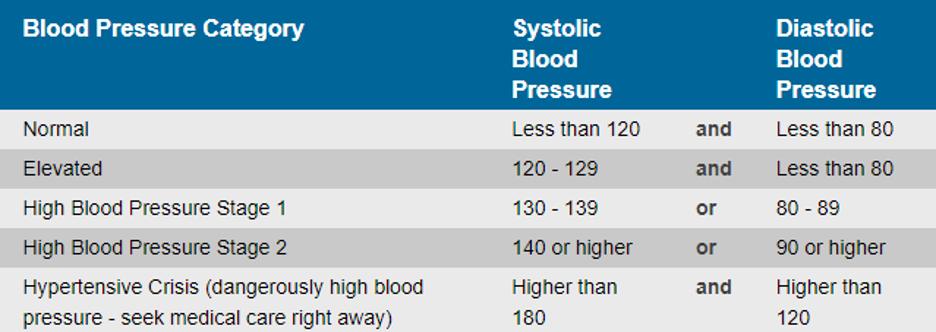
Blood pressure is written as two numbers, such as 120/80. The top number, called the systolic pressure, is the pressure of the blood as it exits the heart. The bottom number, called the diastolic pressure, is the pressure of the blood while the heart is at rest after pumping out blood. The table below defines the different stages of high blood pressure (Heart.org).
Sources:
- What is High Blood Pressure?
- Fuchs FD, Whelton PK. High Blood Pressure and Cardiovascular Disease. Hypertension. 2020 Feb;75(2):285-292. doi: 10.1161/HYPERTENSIONAHA.119.14240. Epub 2019 Dec 23. PMID: 31865786; PMCID: PMC10243231.
Why Should I Care:
As of 2023, the World Health Organization reports that around 1.28 billion adults globally have hypertension, making this a very common condition (WHO). However, only about 21% of adults are controlling their hypertension (WHO).
Genetics and family history account for only about 20% of the cause of hypertension with the remaining 80% due to unhealthy lifestyle choices. Improving lifestyle is the best way to treat and reverse hypertension but a wide variety of medications are also available to help. Untreated high blood pressure can lead to heart attacks, heart failure, arrhythmias or abnormal electrical activity of the heart, as well as impact other parts of the body, such as causing strokes or kidney failure (WHO).
Sources:
How Is High Blood Pressure Harmful To My Body:
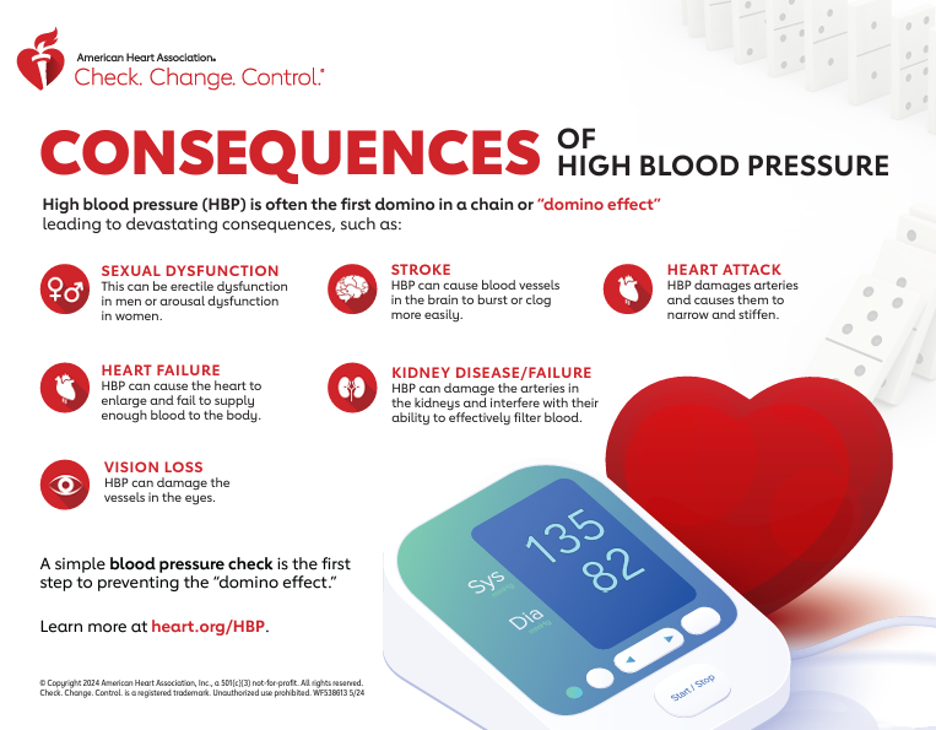
Hypertension, if not treated, has the potential to harm your body. One major consequence of hypertension is atherosclerosis. This occurs when cholesterol deposits in areas where high blood pressure cause blood vessel injuries (AMA). Other possible consequences of hypertension include stroke, heart failure, heart attack, or kidney disease [see infographic].
With the possible harms of high blood pressure, it is therefore very important to keep hypertension managed and under control.
Sources
- What is High Blood Pressure?
- Consequences of High Blood Pressure
How Do I Know If I Have High Blood Pressure?
You can ask your doctor or easily check your blood pressure at home with a simple blood pressure monitoring device. The most accurate devices are automatic and use a cuff that goes around the upper arm directly against the skin. Omron is a reliable brand that is widely available. To find other brands that are reliable or to check one you already have, go to validatebp.org.
Video: How to check your blood pressure at home
How is High Blood Pressure Treated?
The most important way to prevent and treat high blood pressure is through living a healthy lifestyle [see next section]. In addition to a healthy lifestyle, hypertension is often treated with medications. Some examples of blood pressure medications include diuretics, like hydrochlorothiazide, calcium channel blockers like amlodipine, Angiotensin Converting Enzyme (ACE) inhibitors like lisinopril or Angiotensin Receptor Blockers (ARBs) like losartan. Be sure to consult your doctor about taking any medications, especially in order to understand their side effects and see if they are the right choice for you.
Types of Blood Pressure Medications
How Can A Healthy Lifestyle Prevent and Treat Hypertension?
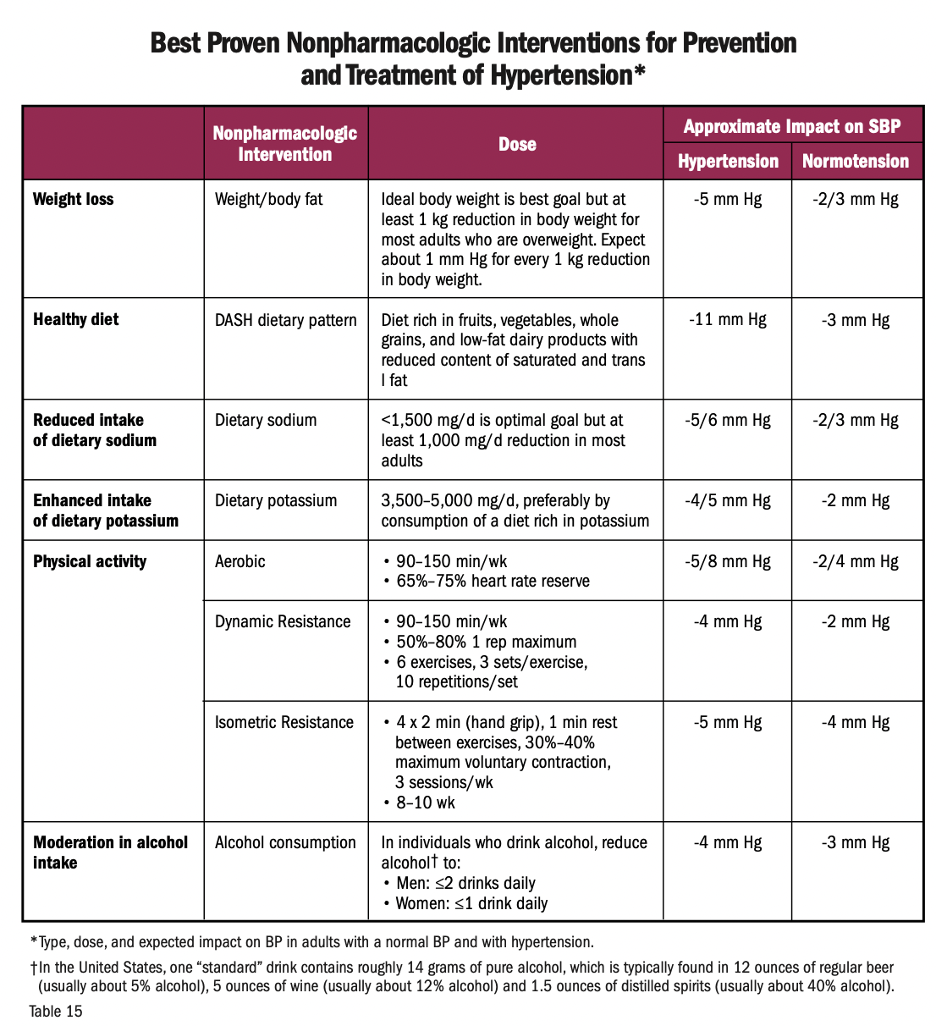
The most important way to prevent and treat high blood pressure is to live a healthy lifestyle. This includes optimizing your diet, exercise, sleep, stress management, healthy relationships, and limitation of harmful substances. Each of these components can help lower blood pressure.
|
Nonpharmacologic Intervention |
Recommendation |
Impact on Blood Pressure |
| Sleep | Aim for 7-9 hrs of sleep nightly. Adding 30min to sleep < 6hrs** | 7-14mm Hg decrease in SBP** |
| Stress Reduction |
Mindfulness-based Stress Reduction: a program focused on 8 weeks of mindfulness classes with at least 30 minutes of daily meditative practices Slow Breathing [see below] |
|
| Nature | Spending time in green spaces, even in residential areas, can help reduce blood pressure |
|
**Haack, M., Serrador, J., Cohen, D., Simpson, N., Meier-Ewert, H. and Mullington, J.M. (2013), Increasing sleep duration to lower beat-to-beat blood pressure: a pilot study. J Sleep Res, 22: 295-304. https://doi.org/10.1111/jsr.12011
***Zou Y, Zhao X, Hou YY, Liu T, Wu Q, Huang YH, Wang XH. Meta-Analysis of Effects of Voluntary Slow Breathing Exercises for Control of Heart Rate and Blood Pressure in Patients With Cardiovascular Diseases. Am J Cardiol. 2017 Jul 1;120(1):148-153. doi: 10.1016/j.amjcard.2017.03.247. Epub 2017 Apr 12. PMID: 28502461.
Diet
Diets low in processed or fast foods and high in plants [fresh or frozen fruits, vegetables, potatoes, rice and beans] have been shown to lower blood pressure.
Video: How to treat high blood pressure with diet
Specific Nutrients
Some specific nutrients raise and some lower blood pressure. Make these choices to lower blood pressure:
Decrease Sodium: Limiting sodium in the diet will lower blood pressure and help prevent heart and kidney disease. Most Americans eat 3400mg of sodium every day. However, the American Heart Association recommends no more than 1500mg of sodium daily, especially for those with high blood pressure. That is only ½ teaspoon of table salt!
The way to achieve this is to limit restaurant food and avoid packaged foods. For food that you cook at home, add any needed salt at the plate rather than cooking--you will get the same taste with less sodium. An easy rule of thumb to remember when looking at food labels is to choose foods where the milligrams of sodium per serving are less than the calories per serving.
- How do I know if a food is high in sodium?
- Check the food label: if the milligrams of sodium per serving are more than the calories per serving, it is a HIGH sodium food that should be limited. If it is less than the calories per serving, it is a LOW sodium food.
Increase Potassium and Magnesium: Increasing the amount of dietary potassium, while decreasing sodium levels, can also help with lowering blood pressure (Samadian). The recommended amount of potassium is 3,500-5000 mg/day and the recommended amount of magnesium is 300-600 mg/day.
- Examples of foods rich in potassium include: spinach, yams, butternut squash, bananas, grapefruit, cherries, plain nonfat yogurt, clams, and pollock
- Food Sources of Potassium | Dietary Guidelines for Americans
- Examples of foods rich in magnesium include: boiled spinach, shredded wheat cereal, cooked edamame, bananas, roasted almonds, cooked quinoa USDA National Nutrient Database-Magnesium
The DASH diet is a recommended diet plan which is high in potassium, as well as calcium and magnesium.
More Information on the DASH diet
Sources
- Samadian F, Dalili N, Jamalian A. Lifestyle Modifications to Prevent and Control Hypertension. Iran J Kidney Dis. 2016 Sep;10(5):237-263. PMID: 27721223
- DASH diet: eating healthy to lower your blood pressure
- Food Sources of Potassium
- Food Sources of Calcium
- 25 Magnesium-Rich Foods You Should Be Eating
GW Lifestyle Medicine Resources on Healthy Eating
Physical Activity
Physical activity is a great way to manage hypertension and lower blood pressure. Research has shown that exercise can help reduce blood pressure, both over the short and long term. Aerobic, resistance and isometric exercise have all been shown to lower blood pressure. Sustained physical activity, such as daily dynamic exercises, can help with reducing hypertension over time (Samadian).
Aerobic exercises get your body moving! There are numerous ways to get in aerobic exercise, but some examples include walking at a quick pace or playing sports (Hopkins). Choose whatever works best for you!
A systematic review in 2023 looked at which form of exercise was most effective at lowering blood pressure and an isometric exercise training such as the wall sit was the clear winner.
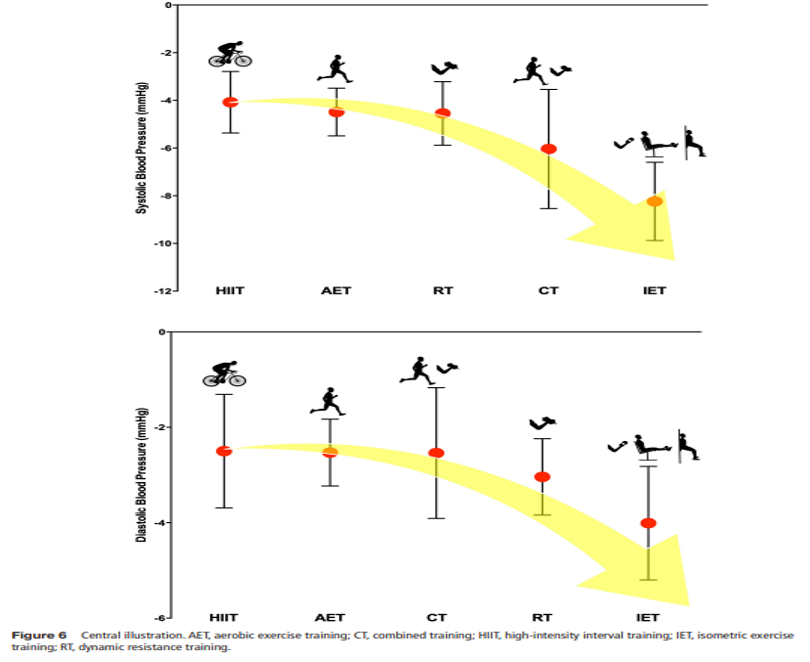
Edwards JJ, Deenmamode AHP, Griffiths M, Arnold O, Cooper NJ, Wiles JD, O'Driscoll JM. Exercise training and resting blood pressure: a large-scale pairwise and network meta-analysis of randomised controlled trials. Br J Sports Med. 2023 Oct;57(20):1317-1326. doi: 10.1136/bjsports-2022-106503. Epub 2023 Jul 25. PMID: 37491419.
Benefits of Movement
Regular physical activity and exercise has many benefits. It lowers blood pressure and blood sugar, helps control weight, improves mood, boosts energy and promotes better sleep. It can also help to treat diabetes, depression, hypertension and cancer.
Aim for at least 150 minutes per week of moderate-intensity exercise, or 75 minutes per week of vigorous exercise. Try to engage in a combination of vigorous and moderate aerobic exercises, such as running, walking or swimming. Squeeze in strength training at least twice per week by lifting free weights, using weight machines or doing body weight exercises.
Read more about how to "Move Your Way!"
The GW Physical Activity Web Guide will help you think about the many benefits of movement, physical activity and exercise and how to make them part of your life. Each section will provide an overview based on the best scientific evidence currently available and will give you links to dig deeper in areas of interest. Look for hyperlinks that lead directly to articles from the scientific literature. Our goal is to meet you where you are: novice, beginner or advanced and give you tools, ideas and resources to help you move to the next level.
Explore the GW Physical Activity Web Guide
Here are some additional resources on physical activity and hypertension, as well as exercise ideas:
- Getting Active to Control High Blood Pressure
- Exercises to Lower Blood Pressure (video)
Explore the GW Resources for Physical Activity
Sources:
- Samadian F, Dalili N, Jamalian A. Lifestyle Modifications to Prevent and Control Hypertension. Iran J Kidney Dis. 2016 Sep;10(5):237-263. PMID: 27721223.
Sleep
Why sleep matters for blood pressure
Getting enough, regular sleep helps your nervous system, hormones, metabolism, and internal body clock work in sync. When sleep is too short—or sometimes too long—these systems get out of balance, which can raise blood pressure (BP), blunt the normal nighttime “dip,” and push morning BP higher.
How much sleep do adults need?
- Most adults (18–64): 7–9 hours/night
- Older adults (65+): 7–8 hours/night
Some people naturally need a bit more or less, but regularly sleeping <7 hours is linked to higher BP. Very long sleep (≥9–10 hours) can also track with higher BP in some studies, often when other health problems are present.
What the research shows (in plain English)
Short sleep raises risk. People who sleep too little are more likely to develop high BP. In lab studies, cutting sleep raises BP within days; in small trials, adding ~30–60 minutes/night lowered 24-hour BP in people with borderline hypertension.
- Who’s most affected? On average, women and many racial/ethnic minority groups (especially people of African descent) appear more vulnerable to the BP effects of short sleep.
- Long sleep: mixed picture. Some large surveys show higher BP with ≥9–10 hours, but this may reflect underlying illness or low activity. More studies using objective sleep measures are needed.
Your action plan
Start here (tonight):
- Pick a target: If you average <7 hours, aim to add 30–60 minutes to your sleep window for the next 2 weeks.
- Keep a steady schedule: Same bedtime and wake time ±30 minutes, even on weekends.
- Light & screens: Get morning daylight; dim lights and limit screens 1–2 hours before bed.
- Caffeine & alcohol: Avoid caffeine after noon (earlier if sensitive). Skip alcohol within 3–4 hours of bedtime.
- Move smart: Exercise most days, but finish vigorous workouts >3–4 hours before bed.
- Wind-down routine: 20–30 minutes of quiet time (stretching, reading, breathing).
- Sleep setting: Cool, dark, quiet room; reserve bed for sleep and intimacy only.
- Naps: If needed, keep them short (<30 min) and before 3 pm.
Check your BP at home
- Measure morning (before meds, after bathroom, before caffeine) and evening for a week; average the readings.
- If morning numbers stay high or your clinician suspects nighttime hypertension, ask about ambulatory BP monitoring (ABPM), which tracks your BP over 24 hours—including sleep.
When to talk to your clinician
- Loud snoring, witnessed pauses in breathing, or morning headaches (possible sleep apnea)
- Insomnia (trouble falling or staying asleep) ≥3 nights/week for ≥3 months
- Resistant hypertension (still high despite 3+ meds)
- Shift work or irregular schedules making sleep difficult—ask for tailored strategies
- Considering sleep extension as part of your BP plan—get personalized guidance
Key takeaways
- Aim for 7–9 hours (7–8 if 65+), at regular times.
- If you’re short on sleep, adding even 30–60 minutes/night can help BP.
- Track home BP, especially morning readings, and share results with your clinician.
- Ask about ABPM if morning BP is high or you suspect nighttime issues.
- Treat sleep disorders (like sleep apnea) and build a bedtime routine—both are BP-friendly.
Information on how to improve your sleep from GW Lifestyle Medicine
Sources:
1. Li C, Shang S. Relationship between Sleep and Hypertension: Findings from the NHANES (2007-2014). Int J Environ Res Public Health. 2021 Jul 25;18(15):7867. doi: 10.3390/ijerph18157867. PMID: 34360157; PMCID: PMC8345503.
2. Shulman R, Cohen DL, Grandner MA, Gislason T, Pack AI, Kuna ST, Townsend RR, Cohen JB. Sleep duration and 24-hour ambulatory blood pressure in adults not on antihypertensive medications. J Clin Hypertens (Greenwich). 2018 Dec;20(12):1712-1720. doi: 10.1111/jch.13416. Epub 2018 Oct 30. PMID: 30375723; PMCID: PMC6289891.
Stress
Stress can also raise blood pressure, which means that reducing stress levels can help with managing hypertension [Beilin]. When we experience stress, many chemical and hormonal changes can happen in our body. Some of these changes and signals can result in increased heart rate or constriction of blood vessels, which can contribute to high blood pressure [Mayo Clinic - Chronic Stress].
Association Between Psychological Health and Heart Disease Including Hypertension
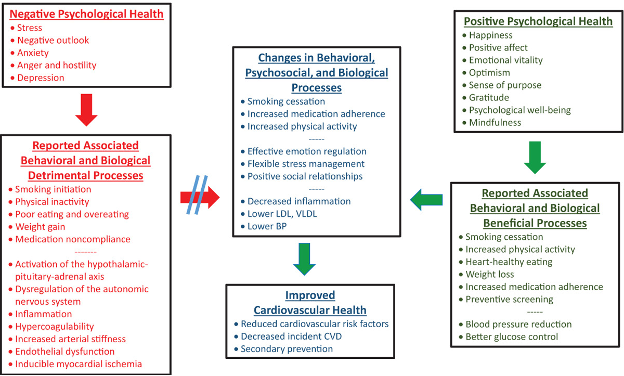
The most effective stress reduction methods to lower blood pressure, supported by moderate- to high-quality evidence, are meditation (especially transcendental meditation), breathing control interventions, and mindfulness-based stress reduction (MBSR), each typically lowering systolic/diastolic BP by about 3–7/2–5 mm Hg.
A 2017 meta analysis showed that slow breathing can lower blood pressure [Zou 2017]. Here is an easy relaxation breathing technique:
4-7-8 Relaxation Breathing
Deep breathing with your exhalation (out breath) longer than your inhalation (in breath) can induce a relaxation response. Use this technique whenever you feel stressed and need to relax. Inhale for 4 seconds. Hold the breath for 7 seconds. Slowly exhale over 8 seconds. This shifts your nervous system from the sympathetic [Fight or Flight] response to the parasympathetic [relaxation] response.
Resources on stress management and how stress can affect your body
Sources:
1. Beilin LJ, Puddey IB, Burke V. Lifestyle and hypertension. Am J Hypertens. 1999 Sep;12(9 Pt 1):934-45. doi: 10.1016/s0895-7061(99)00057-6. PMID: 10509554.
2. Zou Y, Zhao X, Hou YY, Liu T, Wu Q, Huang YH, Wang XH. Meta-Analysis of Effects of Voluntary Slow Breathing Exercises for Control of Heart Rate and Blood Pressure in Patients With Cardiovascular Diseases. Am J Cardiol. 2017 Jul 1;120(1):148-153. doi: 10.1016/j.amjcard.2017.03.247. Epub 2017 Apr 12. PMID: 28502461.
3. https://www.mayoclinic.org/healthy-lifestyle/stress-management/in-depth/stress/art-20046037#:~:text=Understanding%20the….
Social Connection and Healthy Relationships
The relationship between social connection and blood pressure is well-studied. Social support is generally associated with lower blood pressure and better cardiovascular outcomes. On the other hand, less social connection has been associated as a risk for poor cardiovascular outcomes (Xia). Therefore, promoting healthy relationships is important for your health. According to the American Heart Association, research has shown that “people in happy marriages had lower blood pressure than people who weren't married. But people in strained marriages fared worse than single people,” (AHA - “How a happy relationship”). A healthy relationship’s benefit on blood pressure might be associated with lowering stress levels. However, a romantic connection isn’t the only way to promote lower stress through healthy relationships. Friendships and strong social support systems can also provide positive attributes that can help with blood pressure (AHA - “how a happy”).
Sources:
1. https://www.heart.org/en/news/2020/02/05/how-a-happy-relationship-can-help-your-healthHow a happy relationship can help your health
2. Xia N, Li H. Loneliness, Social Isolation, and Cardiovascular Health. Antioxid Redox Signal. 2018 Mar 20;28(9):837-851. doi: 10.1089/ars.2017.7312. Epub 2017 Oct 23. PMID: 28903579; PMCID: PMC5831910.
Alcohol and Tobacco
Smoking and alcohol consumption may increase the risk of hypertension (Samadian).
Alcohol: Alcohol can increase blood pressure, which is important to keep in mind for individuals who already have hypertension (AHA). Consequently, reducing alcohol consumption can improve blood pressure. The American Heart Association recommends that men should limit themselves to two drinks per day, and women should limit themselves to one drink per day. However, it is important to discuss with your healthcare provider a plan that works for you (AHA).
Smoking: While smoking can lead to hypertension, it can also cause atherosclerosis, which is already a condition that may be associated with hypertension. As such, smoking, in addition to hypertension, can be harmful to your health. Smoking can even raise your blood pressure in the short term (AHA).
Explore the GW resources to help with quitting smoking and limiting alcohol
Sources:
1. Samadian F, Dalili N, Jamalian A. Lifestyle Modifications to Prevent and Control Hypertension. Iran J Kidney Dis. 2016 Sep;10(5):237-263. PMID: 27721223.
Optimally Healthy Lifestyle
- A diet low in sodium, and high in potassium, magnesium, and calcium (in accordance with the DASH guidelines)
- Regular physical activity
- 7-9 hours of sleep every night
- A positive support system
- Avoidance of harmful substances, like smoking and alcohol